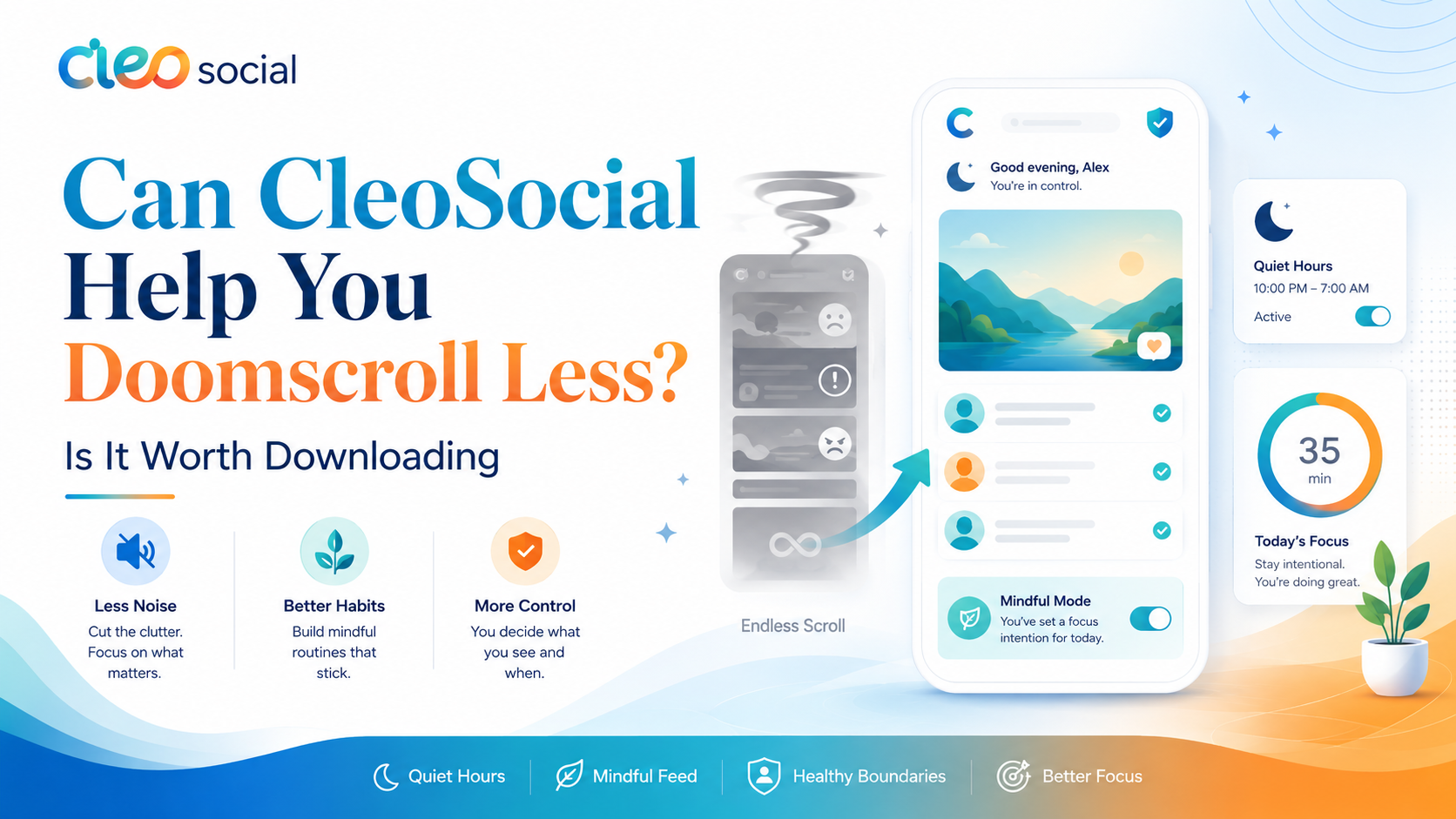
How CleoSocial Time Limits Help You Stay in Control
Learn how CleoSocial time limits put you in control of your social media. Set hard daily limits, track usage, and take back your screen time.
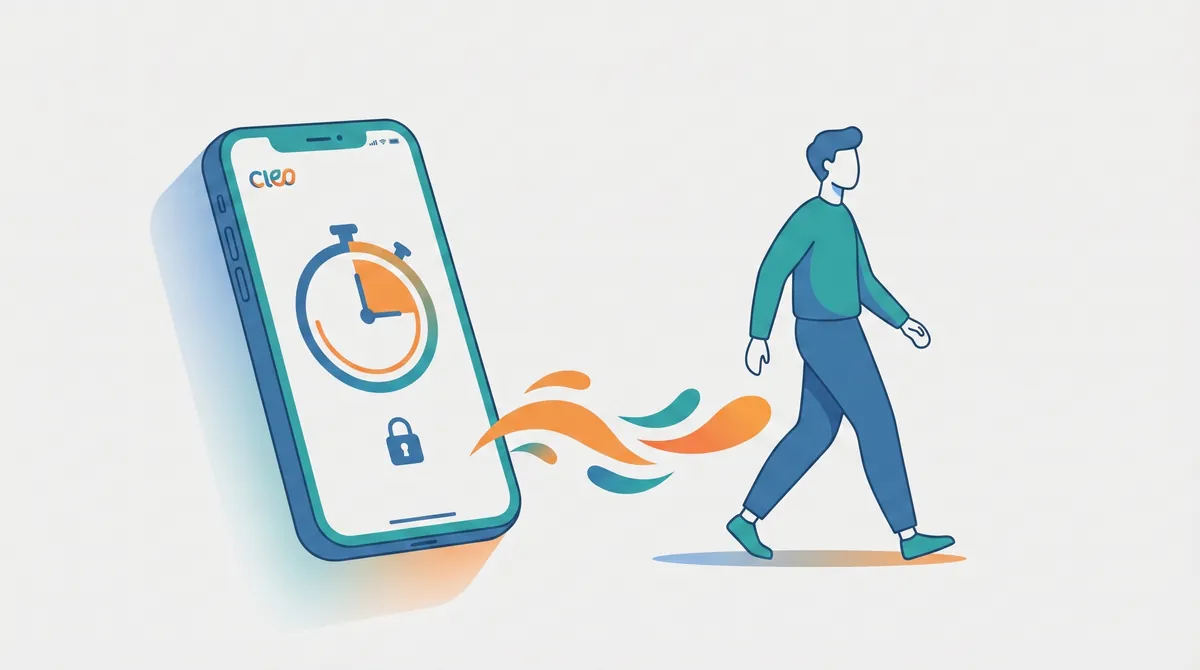
Table of Contents
The Social Media Time Problem
You open the app for five minutes. Suddenly it's an hour later.
This happens to all of us. Social media platforms are built to keep you scrolling. Notifications arrive. Autoplay features start videos. The feed never really ends. Before you know it, you've lost a chunk of your day.
It doesn't have to be this way. CleoSocial time limits change how this works by putting you in control instead of leaving you at the mercy of endless feeds and notifications.
Way 1: You Set the Limit Yourself
The most important feature of CleoSocial time limits is also the simplest: you decide how much time you get.
Most apps don't ask you. They optimize for engagement. They want you to spend as much time as possible on their platform. The goal is your attention, not your wellbeing.
CleoSocial flips this on its head. When you set up your account, you choose your daily limit. Maybe it's thirty minutes. Maybe it's two hours. What matters is that it's your choice.
This single decision shifts power back to you. You're not fighting against an algorithm designed to capture your attention. You're working with a tool that respects your boundaries. Your limit reflects your actual life, your values, and your priorities.
And here's the thing: you can change it anytime. Some weeks you might need more social time because a friend is visiting. Other weeks you might want less. Your limit grows and shrinks with your life.
Way 2: CleoSocial Time Limits Are Hard Stops, Not Suggestions
Different apps offer different approaches to screen time.
Some apps send gentle reminders when you're approaching your limit. These soft warnings help some people. But research on behavior change suggests that notifications and reminders alone are often ineffective. We see the reminder and keep scrolling anyway.
CleoSocial time limits work differently. When your time is up, your time is up. The app simply closes. You can't scroll past it. You can't click "just five more minutes."
This might sound harsh, but it's actually liberating. A hard limit removes the willpower battle. You don't have to constantly negotiate with yourself. You don't have to resist temptation. The decision is already made.
Hard limits create real change because they align your tool with your intention. You said you'd spend thirty minutes. CleoSocial makes sure that happens.
Way 3: Daily Usage Tracking Shows You Real Numbers
Awareness changes behavior.
When you can see how much time you actually spend on social media, something shifts. You might think you use the app for thirty minutes a day. But maybe it's closer to ninety. Seeing that number matters.
CleoSocial time limits include built-in usage tracking. Every day, you can see exactly how much time you spent. Was it under your limit? Over it? The numbers don't lie.
This isn't about shame or judgment. It's about reality. Once you see your actual usage patterns, you can make better decisions. You might realize you spend the most time on social media right before bed. That insight alone is valuable. Maybe you set a limit that ends your social time an hour before you sleep. That changes what happens next.
Tracking also helps you spot trends. You might notice that certain days trigger more scrolling than others. Stressful work days. Lonely nights. Bored afternoons. When you understand your patterns, you can plan better. You can make a deliberate choice to do something else instead.
Way 4: CleoSocial Time Limits Help You Plan Your Day
Most people don't think much about when they want to use social media.
They just use it whenever the urge strikes. That might be while you're supposed to be working. Or when you said you'd spend time with family. Or right when you should be focusing on something important.
CleoSocial time limits encourage a different approach. Because you only have a set amount of time, you start to think strategically. You ask yourself: when do I actually want this time?
Maybe your answer is during lunch. Or right after work as a wind-down. Or a few minutes in the evening. Once you decide, you can plan your day around it. Your social time becomes part of your schedule instead of something that hijacks it.
This creates more structure and intention in your day. You're not responding to notifications. You're choosing when to engage. You're designing your time instead of having it designed for you.
Way 5: CleoSocial Time Limits Work Even When You Forget
Willpower is limited. We all know this. Some days you're strong. Other days you're not.
Maybe you wake up tired. You're stressed about work. You've had a hard week. Your willpower is basically empty. Those are exactly the days when you most need protection from endless scrolling.
That's where CleoSocial time limits really shine. They work even when you're not at your best. Even when you forget why you set them. Even when you're emotionally vulnerable and scrolling sounds like exactly what you need.
The limit doesn't care about your excuses. It doesn't judge. It just enforces the boundary you set for yourself when you had a clearer head.
This is the difference between relying on willpower and using design. Willpower fails sometimes. Design doesn't. CleoSocial time limits are designed to protect you on the days when you can't protect yourself.
Taking Control Back
Social media doesn't have to control your time.
You can set boundaries that actually work. You can use an app that respects those boundaries. You can know exactly how much time you're spending and why.
CleoSocial time limits make this possible. They're not a judgment on social media itself. Staying connected matters. Seeing what friends are doing matters. But doing these things on your terms, in amounts that work for your life, matters more.
The best part is simple: it's entirely up to you. Your limit. Your time. Your control.
Resources and Further Reading
If you want to dive deeper into screen time research, these resources offer solid science-backed information:
- The American Psychological Association has published multiple studies on screen time and digital wellness at apa.org
- The National Institute of Health provides evidence-based information about behavioral patterns and technology at nih.gov
- Stanford University's Internet Observatory researches how digital platforms work at cyber.stanford.edu
Want to give CleoSocial a try? Start setting your own limits today, or read an honest review first if you want the limitations up front. Learn more about how CleoSocial works on our about page, or check out our privacy policy to see exactly how we handle your data.
Interested in digital wellbeing stories? Visit our blog for more perspectives on taking control of your screen time.
Ready for Social Media That Respects You?
CleoSocial puts you in control. Content ratings, time limits, and real connections. Free to use, always.

Continue Reading
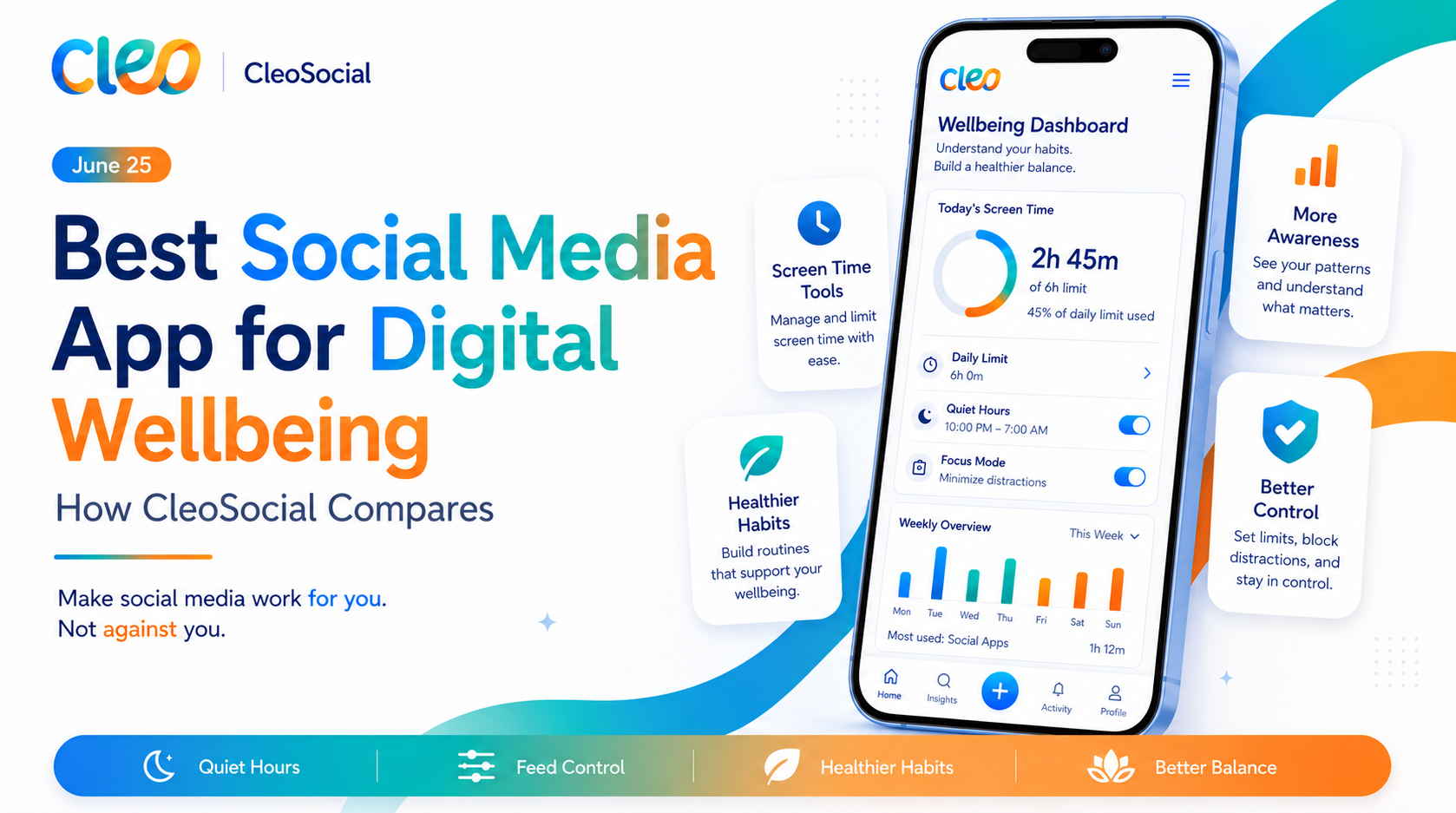
Best Social Media App for Digital Wellbeing: How CleoSocial Compares
June 25, 2026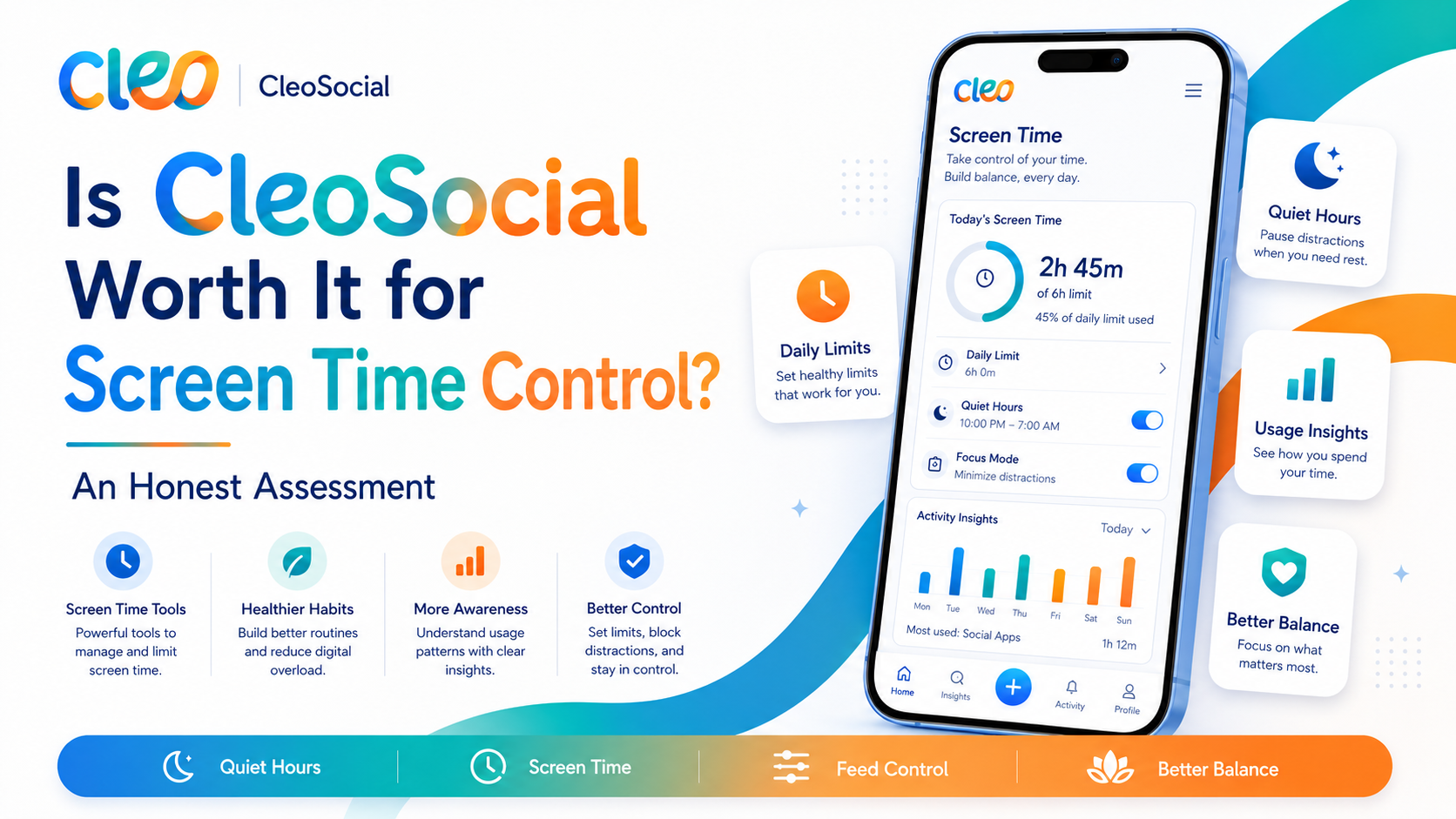
Is CleoSocial Worth It for Screen Time Control? An Honest Assessment
June 13, 2026