How Content Ratings Work on Social Media
Discover how content ratings work on social media. Learn why they matter and what they could mean for your online experience.
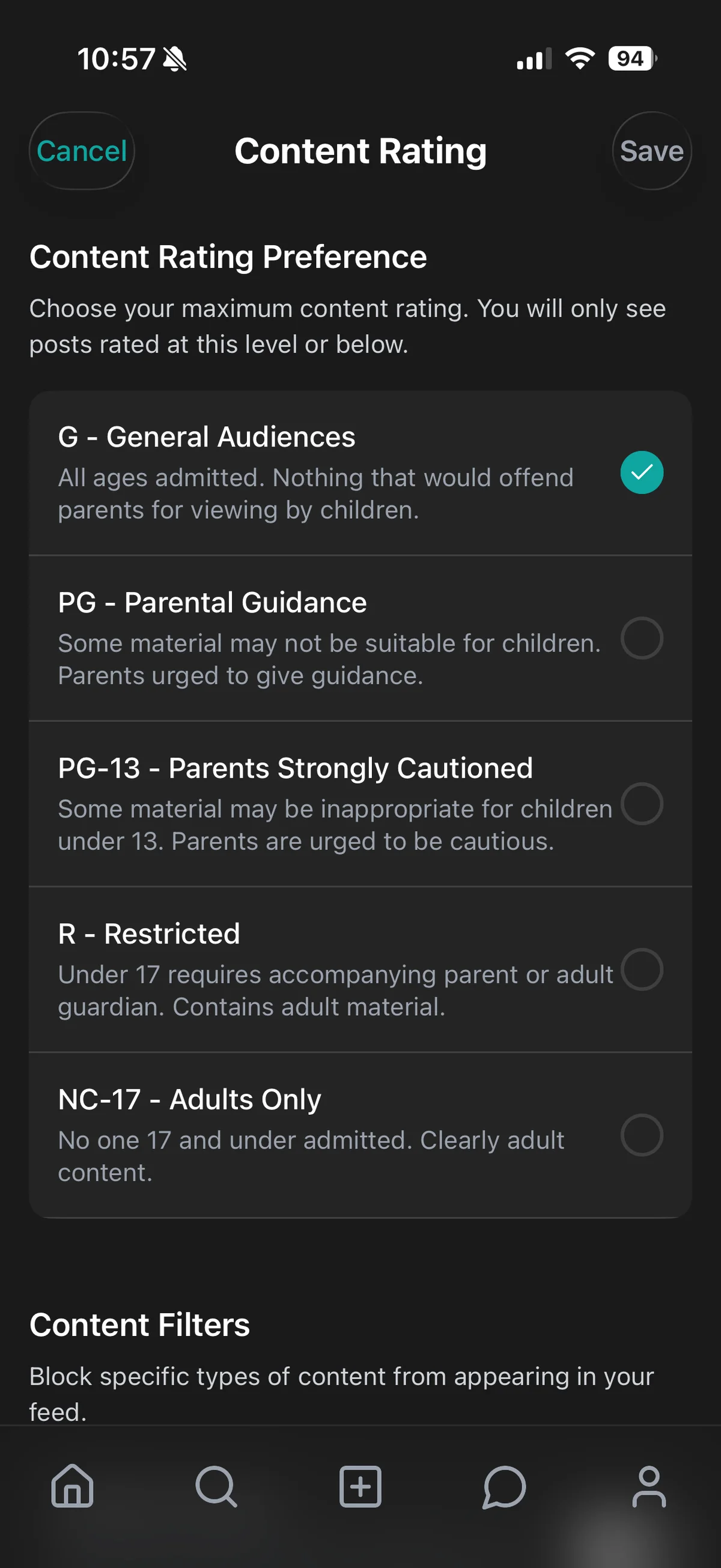
Table of Contents
When you go to the movies, you know what to expect. A G-rated film will be family friendly. An R-rated movie will have mature themes. But when you open a social media app, there are no ratings. You might see a cooking video, a news clip, or something upsetting, all in the same scroll.
This gap has real consequences. Research from Pew and other organizations consistently finds that large majorities of users want more control over the content they see online. Yet most social platforms offer little transparency about what appears in your feed.
Content ratings could change that. Here's what you should know about how content ratings work, why they matter, and what they could mean for your time online.
Most Media Has Ratings, But Social Media Does Not
Content ratings are not a new idea. They have been part of our media landscape for decades.
The film industry created the MPAA rating system in 1968. According to the Motion Picture Association, this system gave people a shared language. G for general audiences. PG for parental guidance. R for restricted.
Television followed with its own system in 1997. Video games got ratings in 1994 through the ESRB. Even music albums carry parental advisory labels for explicit content.
Social media is the exception. With billions of posts uploaded every day, platforms have relied on community guidelines and algorithms instead of clear ratings. This means users often have no idea what kind of content they will encounter until it appears on their screen.
Platforms Use Hidden Systems Instead
Just because there are no visible ratings does not mean there is no system. Social media platforms make constant decisions about what you see. They just do it behind the scenes.
Algorithms analyze your behavior to predict what will keep you engaged. Community guidelines set rules about what content is allowed. Moderators review flagged posts. But all of this happens without your input or visibility.
The difference matters. When a movie carries an R rating, you can choose whether to watch it. When an algorithm decides what appears in your social feed, you have no such choice. You see what the platform shows you.
This hidden approach creates problems. Research from platform transparency groups has found that most major social platforms offer users limited content filtering options. Most people cannot adjust what they see, even if they want to. Learn more about why different platforms handle content differently.
Content Ratings Give You Choice
A rating system for social media would work differently than current approaches. Instead of hiding or removing content, ratings would simply label it. Users could then decide for themselves.
Imagine opening your feed and seeing clear markers. A post might show a content intensity level. You could set your preferences to see more or less of certain types. Parents could adjust settings for their teenagers. Adults could make their own choices.
This approach puts power in your hands rather than the platform's. It is similar to how TV parental controls work. The content exists, but you control what enters your home.
Ratings also help when something unexpected appears. Instead of being surprised by graphic content, you would see a warning first. You could choose to view it or skip it. That small moment of choice makes a big difference.
They Help Parents and Teens Navigate Together
Parents worry about what their children see online. Research from Common Sense Media and other family-focused organizations has found that a large majority of parents are concerned about inappropriate content on social media. But current tools offer limited help.
Most parental controls focus on time limits or app blocking. They do not address what actually appears on the screen. Parents face a hard choice: allow full access or ban the app entirely.
Content ratings could create a middle ground. Families could set content preferences together. A parent might allow content rated as moderate but restrict more intense material. Teens could request changes as they mature.
This builds trust instead of surveillance. When teens understand the rating system, they can participate in setting their own boundaries. It becomes a conversation rather than a lockdown. Learn more about helping teens navigate social media safely.
Ratings Are Not Censorship
Some worry that content ratings lead to censorship. But there is an important difference between labeling and removing.
Censorship means content disappears. No one can see it. Ratings mean content stays visible but carries information about its nature. Users decide whether to engage.
Think of it like movie ratings again. An R-rated film is not banned. It simply carries a label so viewers know what to expect. Adults can still watch it. Parents can decide whether their teenagers are ready.
The same principle applies to social media. A post with a content rating is still available. The rating just adds transparency. This protects free expression while giving users the information they need to make choices.
The System Can Be Community-Driven
One challenge with content ratings is scale. Social media platforms host billions of posts. How could anything be rated accurately?
The answer may lie in community participation. Platforms could let users help rate content, similar to how review sites work. When enough people agree on a rating, it becomes the default label.
This approach has worked elsewhere. Reddit uses community voting to surface quality content. Wikipedia relies on volunteers to maintain accuracy. A community-driven rating system could bring the same wisdom of crowds to content labels.
The system would need safeguards. Automated tools could flag obvious problems. Human moderators could review disputed ratings. Over time, the ratings would become more accurate as more users participated.
Some Platforms Are Moving This Direction
The idea of social media content ratings is gaining traction. Some platforms have started experimenting.
TikTok introduced content warnings for certain topics. YouTube uses age restrictions on some videos. Instagram added sensitive content warnings that appear before viewing. Each of these represents a step toward the rating model.
These early efforts are not perfect. The warnings can be inconsistent. Users sometimes bypass them. But they show that platforms recognize the need for more transparency.
As users demand more control, more platforms will likely adopt rating-like features. The question is not whether content ratings will come to social media, but how quickly and how well they will work.
Why This Matters for Your Social Media Experience
Content ratings connect to a bigger idea. Your time and attention matter. You should have control over what you see and experience online.
Right now, most social platforms decide for you. Their algorithms choose your content. Their rules set your boundaries. You are a passenger rather than a driver.
Content ratings flip this relationship. You get information. You make choices. The platform serves your preferences rather than the other way around.
This matters for your mental health too. Unexpected exposure to upsetting content takes a toll. Knowing what is coming lets you prepare or avoid. That simple transparency can change how you feel after using social media.
The Bottom Line
Social media has grown faster than its systems for user protection. We have ratings for movies, TV, and video games, but not for the content we scroll through every day. What we covered shows why that gap matters.
Content ratings give you choice. They help families navigate together. They add transparency without censorship. And they are starting to appear on some platforms.
At CleoSocial, we believe you should control your experience. That is why we built content ratings right into the app. You can set your preferences and see content that matches your comfort level. We think you deserve to know what you are getting into.
The future of social media should include more transparency, not less. Content ratings are one step toward a healthier relationship with the time we spend online.
Ready for Social Media That Respects You?
CleoSocial puts you in control. Content ratings, time limits, and real connections. Free to use, always.