How to Help Teens Navigate Social Media Safely
Discover practical strategies for parents to guide young people toward healthy online habits and safe social media use.

Table of Contents
Teens spend hours on social media every day. They connect with friends, explore interests, and shape their identities online. But they also face risks that many parents do not fully understand.
A Common Sense Media report found that a substantial majority of teens have encountered inappropriate content online. Yet most parents feel uncertain about how to help. Banning social media rarely works and can damage trust. Ignoring it leaves teens unprotected.
The middle ground is guidance. Parents can help teens develop skills to navigate social media safely, just as they help them navigate the physical world. This approach builds trust and creates lasting habits.
Here's how to help the teens in your life use social media more safely.
Talk Early and Often
Many parents wait until problems arise to discuss social media. But ongoing conversations work better than crisis interventions.
Start before your teen joins their first platform. Talk about what they might encounter. Discuss both benefits and risks. Make conversation normal rather than confrontational.
Continue these talks as they grow. Ask what apps they use. Ask what they like about them. Ask what bothers them. Listen more than you lecture.
When conversations are regular, teens are more likely to come to you with problems. They trust that you will respond helpfully rather than punitively. This trust is your best safety net.
Set Clear Expectations Together
Rules imposed without discussion breed resentment. Rules negotiated together create buy-in.
Sit down with your teen and discuss what makes sense for your family. Topics might include:
- Which apps are allowed and when
- Time limits and phone-free times
- What is okay to share and what is not
- How to handle requests from strangers
- What to do if something feels wrong
Let your teen contribute. They may have insights you have not considered. They will be more likely to follow rules they helped create.
Write down what you agree on. Revisit it periodically. As teens mature, expectations can evolve. What works for a 13-year-old may not fit a 17-year-old.
Teach Critical Thinking About Content
Teens encounter all kinds of content on social media. Some is accurate. Much is not. Some is created by peers. Much comes from strangers, bots, or manipulators.
Help teens develop critical thinking skills. Ask questions like:
- Who created this content and why?
- How do you know if something is true?
- What emotion does this content want you to feel?
- What does this post want you to do or believe?
Media literacy takes practice. Discuss examples together. When something questionable appears in your own feed, talk through how you evaluated it.
Teens who can think critically about content are less vulnerable to misinformation, manipulation, and harmful influences. This skill protects them across all platforms.
Model Good Habits
Teens watch what adults do more than they listen to what we say. If you struggle with social media boundaries, they notice. If you scroll through dinner, they learn that is normal.
Model the habits you want to see. Put your phone away during family time. Set your own limits. Talk about when social media feels good and when it does not.
Be honest about your own struggles. If you have trouble putting your phone down, say so. Discuss what you are trying to do about it. This makes the conversation real rather than preachy.
Modeling also extends to how you treat others online. Teens learn how to comment, share, and engage by watching the adults in their lives. Be the example you want them to follow.
Use Platform Tools Wisely
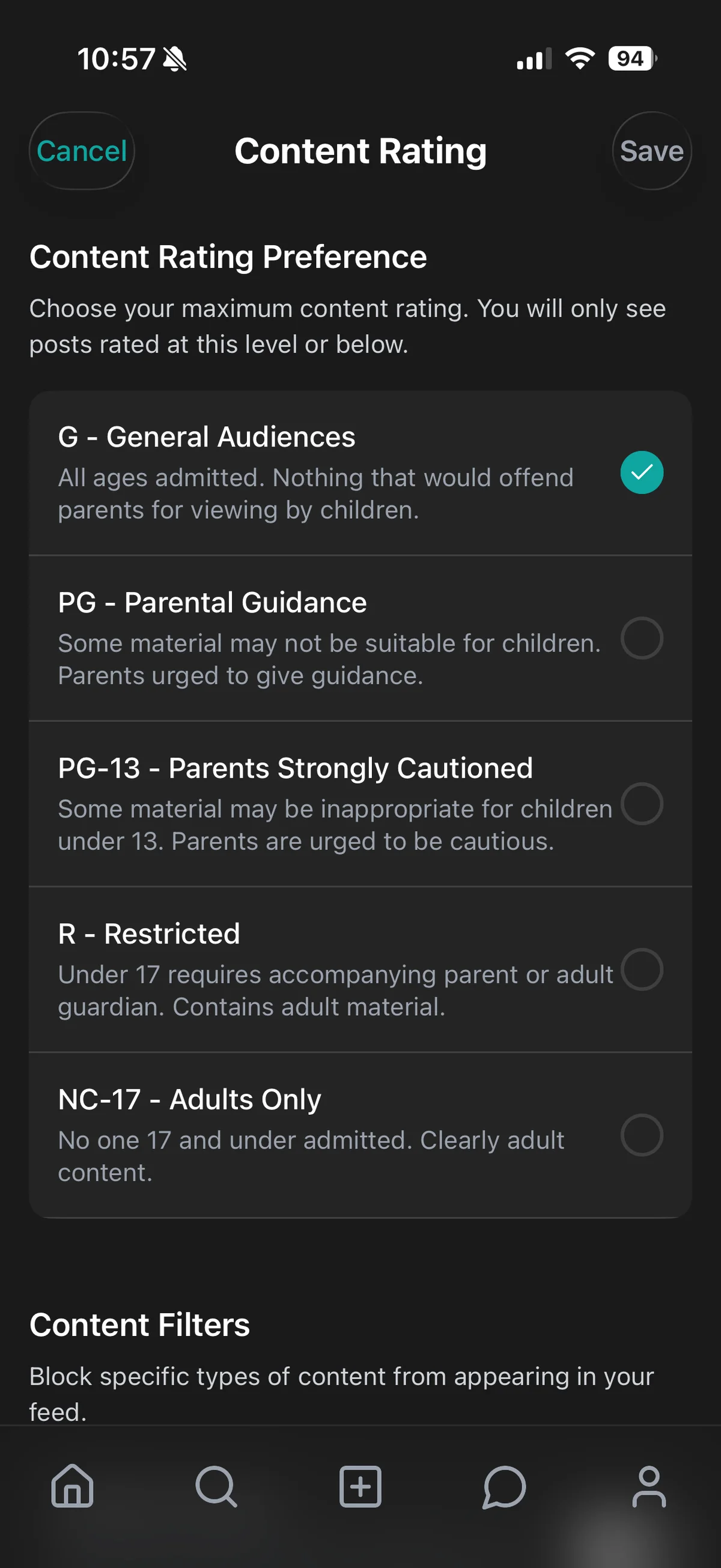
Most platforms offer safety tools, but many families do not use them. Features like content filters, time limits, and privacy settings can provide guardrails. Learn more about how content ratings can help protect teens online.
Explore settings together with your teen. Adjust privacy to limit who can see their content. Turn on content warnings where available. Set up screen time reminders.
At CleoSocial, we built content ratings and time controls specifically to give families options. Teens can set their own content preferences. Parents can adjust settings for younger users. These tools support guidance rather than replacing it.
Tools work best as training wheels, not permanent solutions. The goal is for teens to develop their own judgment. But guardrails help while that judgment develops.
Create Open Doors, Not Locked Ones
When teens get into trouble online, they need adults they can turn to. If they fear punishment or confiscation, they will hide problems instead of seeking help.
Make it clear that your teen can come to you without fear. If someone pressures them for photos, you want to know. If they see something disturbing, you want to help. If they make a mistake, you will respond with guidance, not anger.
This does not mean no consequences. It means that safety comes first. When a teen trusts that you will prioritize their wellbeing over punishment, they are more likely to ask for help when it matters most.
Create multiple open doors. Teens might talk to a parent, an aunt, a teacher, or a coach. Make sure they have adults they trust and who understand online issues.
What This Means for Your Family
Helping teens navigate social media is not about control. It is about guidance, skill-building, and trust. Teens will encounter both opportunities and risks online. Your job is to prepare them.
The approaches we covered create a foundation. Conversations build trust. Negotiated rules create buy-in. Critical thinking skills protect against manipulation. Good modeling teaches by example. Platform tools provide guardrails. Open doors ensure help is available.
Social media is not going away. The teens who thrive online are those with support, skills, and trust from the adults in their lives. Be that adult.
The Bottom Line
Teens need guidance navigating social media, not surveillance or avoidance. Talking regularly, setting expectations together, teaching critical thinking, modeling good habits, using platform tools, and keeping doors open helps teens develop the judgment they need.
Every teen is different. Every family is different. The specific rules and approaches will vary. What matters is the underlying relationship. Teens who trust their parents will seek guidance. Teens who fear punishment will hide problems.
At CleoSocial, we believe in giving families tools to support teens without spying or restricting. Content ratings let teens set their own comfort levels. Time reminders help them manage usage. These features support the guidance you provide at home.
Your teen can have a healthy relationship with social media. You can help them build it. Start the conversation today.
Ready for Social Media That Respects You?
CleoSocial puts you in control. Content ratings, time limits, and real connections. Free to use, always.