How to Use Social Media Time Limits That Actually Work
Master social media time limits with strategies that stick. Learn proven methods to take back control of your screen time without relying on willpower alone.
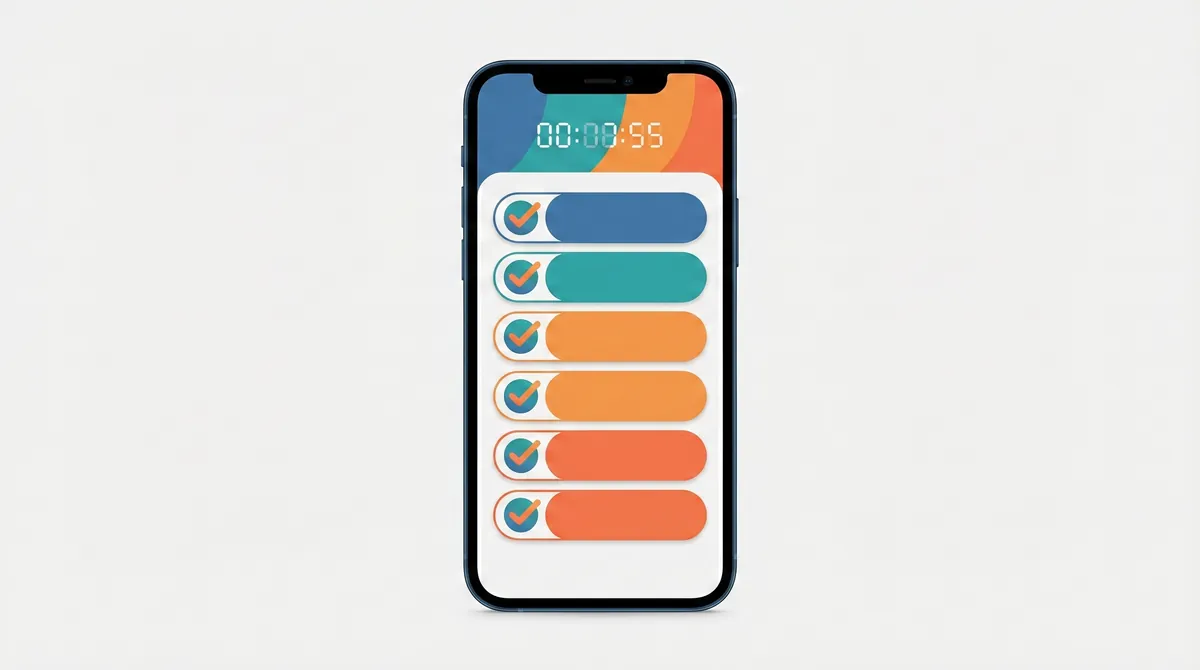
Table of Contents
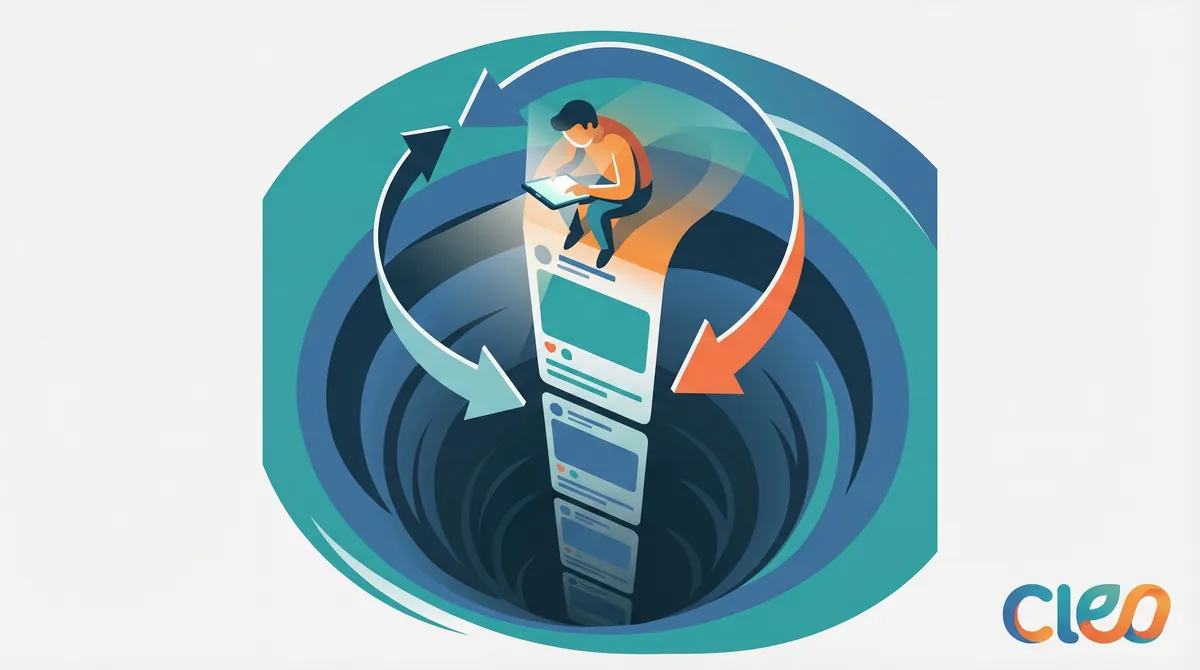
You've tried to cut back. You've set intentions. You've probably promised yourself you'd spend less time scrolling. And then 3pm rolls around and you're deep in someone's vacation photos again.
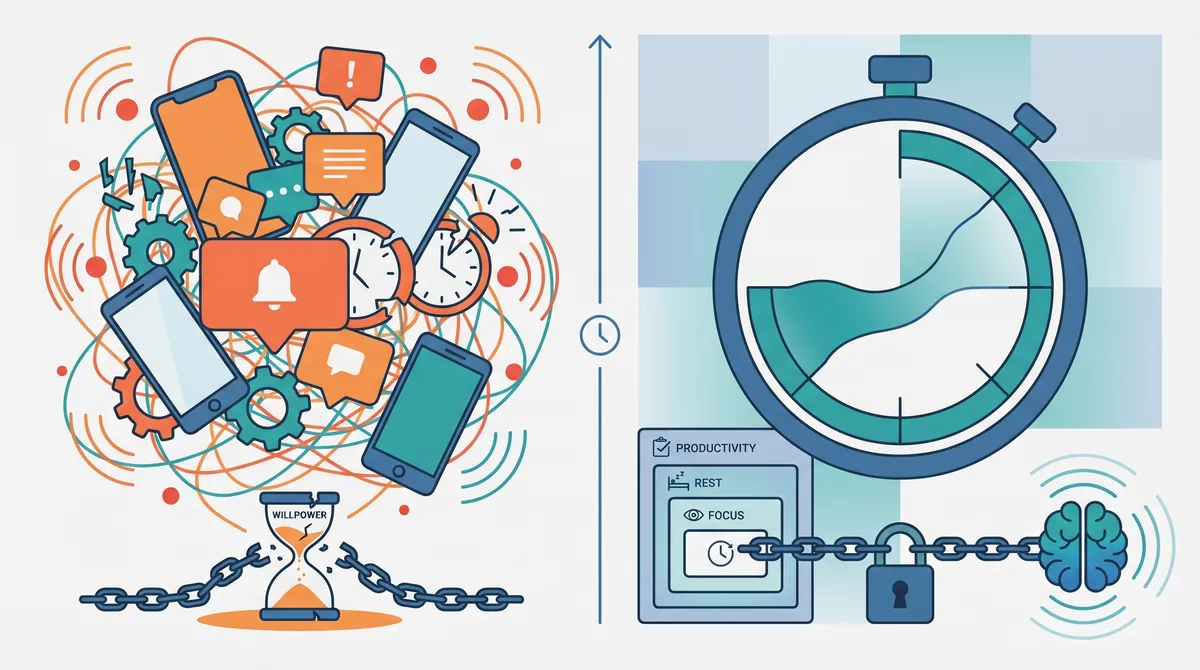
The problem isn't that you lack discipline. The problem is that you're relying on willpower alone, and willpower has a terrible track record against apps designed by teams of engineers to keep you hooked.
Social media time limits sound simple in theory. In practice, they're one of the most effective tools for reclaiming your time—but only if you set them up correctly. Here's what actually works.
Start With a Realistic Limit, Not Zero
The biggest mistake people make is setting social media time limits at zero. Or they go from two hours a day straight to 15 minutes and wonder why they can't stick to it.
Your brain doesn't work that way. Apps have conditioned you to expect a certain amount of dopamine. Cut it off completely and you'll either:
- Abandon the limit after two days
- Become irritable and anxious
- Sneak around the restriction
Instead, start with a limit that feels slightly uncomfortable but not punishing. If you're currently spending three hours daily, set your limit at two hours. If it's an hour, go for 40 minutes.
This sounds counterintuitive, but research on behavior change suggests that people stick to changes better when they're gradual. The point isn't perfection on day one. The point is a sustainable reduction that you can live with long enough to turn it into a habit.
You can always tighten the limit after a month. Small wins compound.
Use Hard Limits Instead of Soft Reminders
Soft reminders don't work. A notification telling you "You've used 50 minutes today" at the top of your screen doesn't stop you. You just tap through it.
Hard limits are different. A hard limit blocks you. It says "You've hit your daily limit" and closes the app. You can't scroll past it. You can't rationalize your way around it.
The difference matters because reminders place the burden on your willpower. Every time you see that notification, you have to choose to stop. That's friction, and friction requires energy.
Hard limits remove the choice. They're built into the system. No willpower required.
This is why apps specifically designed around social media time limits are more effective than built-in app timers. An app enforces the boundary. Your phone's willpower-dependent timer assumes you have unlimited self-control.
You don't. Neither do most people. Design around that reality.
Track Your Baseline Before You Set Limits
Before you set any social media time limits, spend three or four days tracking how much time you're actually spending. Not guessing. Measuring. Learn more about the 7 signs your screen time may be too high.
Most people drastically underestimate their daily usage. They think it's 45 minutes when it's really two hours. This gap between perception and reality matters.
When you set limits based on a guess, they often feel arbitrary or impossible. When you set them based on real data, they feel grounded.
Here's what to track:
- Total daily screen time on social apps
- Time spent per app
- When you're most tempted to scroll
- What triggers sessions (boredom, anxiety, habit)
This baseline gives you two things. First, it shows you exactly where your time goes. Second, it gives you a realistic starting point for your limit. You're not working against a made-up number; you're working against facts.
Plan What You'll Do With Your Reclaimed Time
This might sound obvious, but most people don't do it. They set social media time limits and then don't know what to do with the extra 45 minutes.
So they:
- Scroll a different app instead
- Feel bored and anxious
- Give up and go back to their old habits
- Replace one digital habit with another
That's not failure. That's just human nature seeking stimulation.
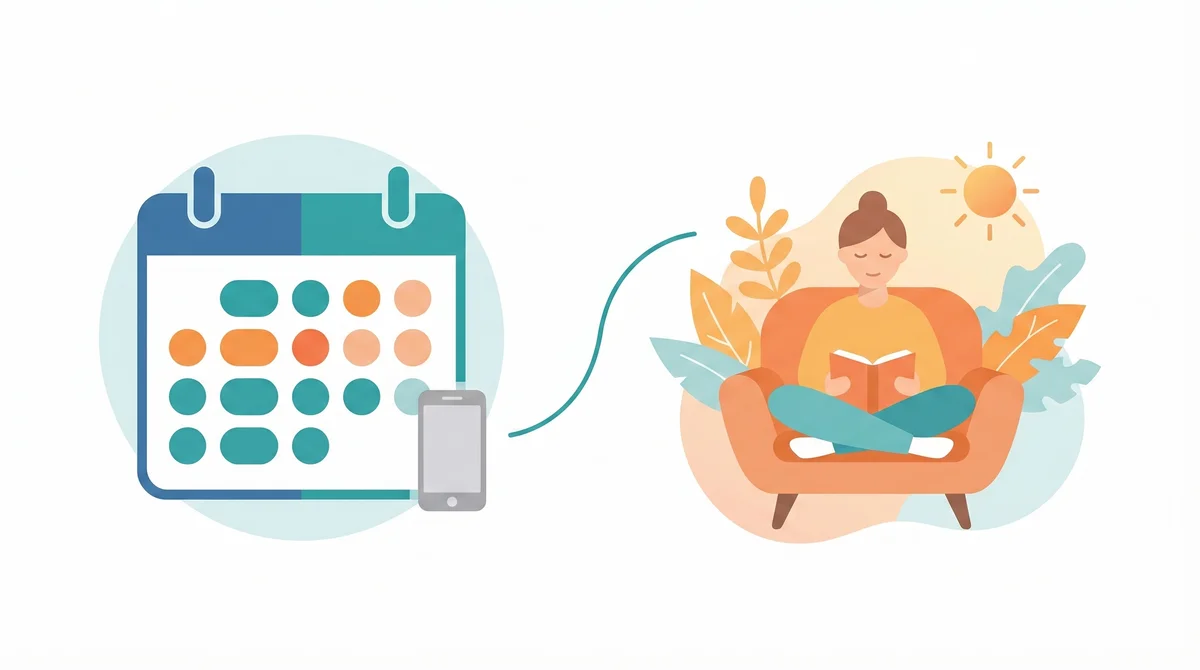
Plan ahead. Before you activate your limits, decide what you'll do with the time you're taking back. Some ideas:
- Read (physical books work best)
- Walk or move your body
- Call someone
- Work on a project
- Sit quietly with a coffee
- Play music or listen to a podcast
Pick something concrete. Not "relax" (too vague) or "be productive" (sounds like work). Pick an actual activity that appeals to you.
This reframe changes everything. You're not fighting social media. You're choosing something else. That's a much easier mental shift.
Use App-Enforced Limits, Not Just Willpower
Your phone's built-in app timer is a suggestion. Your willpower is a suggestion too.
App-enforced limits from a dedicated platform are non-negotiable. When the limit hits, the app closes. That's the system working, not your discipline failing.
This matters psychologically. When you hit a hard limit, you don't feel like you failed. You feel like the boundary is real. And real boundaries are easier to respect than imaginary ones.
The best social media time limits are enforced at the system level, not by you. You set them once, and then you don't have to think about them anymore. The app handles the heavy lifting.
This is why people who switch to platforms built around boundaries often say "This is so much easier." It's not because they suddenly have more willpower. It's because they don't have to use willpower at all.
Review and Adjust Your Limits Monthly
Your life changes. Your stress levels shift. Your schedule evolves. Your social media time limits should evolve too.
A limit that worked perfectly in January might feel too tight in April. That's not failure. That's adjustment.
Set a reminder for the first of each month to review your limits. Ask:
- Am I hitting my limit consistently?
- Does it feel realistic or punishing?
- Has my schedule changed?
- Are there days or seasons where I need more flexibility?
If you're consistently hitting your limit early, you can reduce it further. If you're rarely hitting it, it might be too generous. If you're struggling, you might need to ease up slightly and reset.
The goal isn't a perfect number. The goal is a limit you can actually maintain. Perfection is the enemy of progress.
Making It Stick
Social media time limits only work if you actually use them. Here's the framework that sticks:
Set a realistic limit. Use tools that enforce it automatically. Track your baseline so your limit isn't arbitrary. Plan what you'll do instead. Review and adjust monthly.
This isn't about willpower. It's about designing your environment so the right choice is the easy choice.
The apps aren't going anywhere. They're going to keep working to capture your attention. But you don't have to let willpower be the only thing standing between you and hours lost to endless scrolling.
Set your limits. Let the system do the work. Take back your time.
Ready to reclaim your time? Check out our blog for more strategies on digital wellness, or explore how CleoSocial helps you enforce your boundaries automatically. We also take your privacy seriously—your time limits are yours alone.
Ready for Social Media That Respects You?
CleoSocial puts you in control. Content ratings, time limits, and real connections. Free to use, always.