Why Endless Scrolling Is So Hard to Stop
Discover why endless scrolling feels impossible to break. Learn the psychology behind social media's pull and strategies to regain control of your screen time.
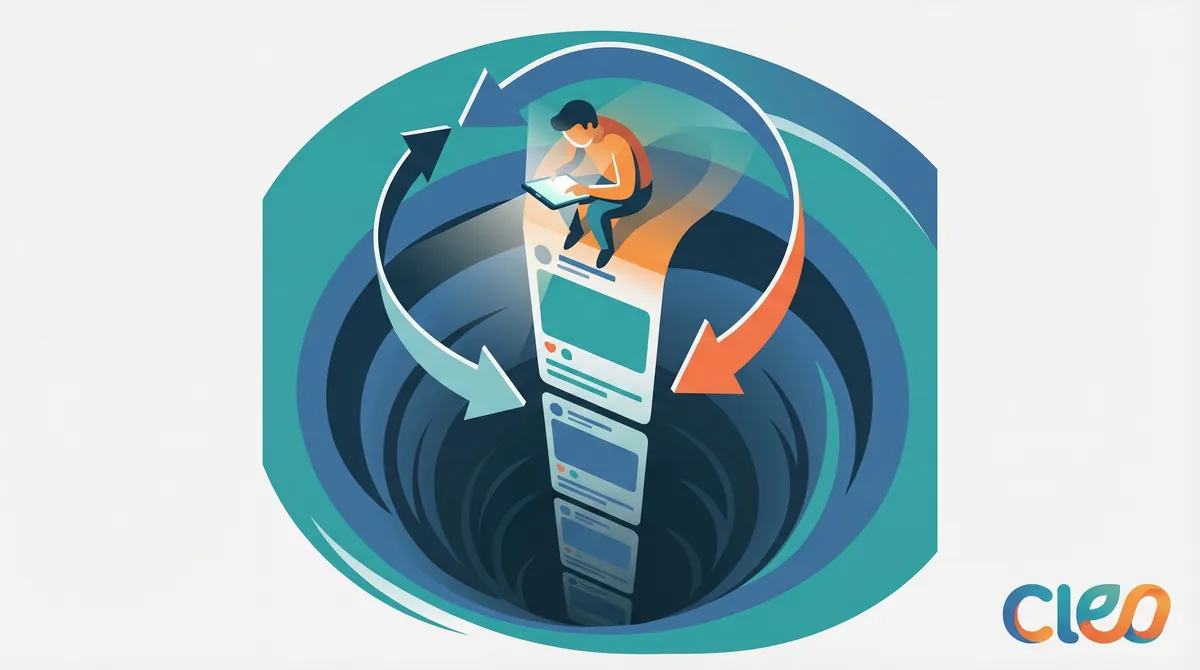
Table of Contents
You open your phone to check one message. Thirty minutes later, you're still scrolling. Your thumb moves on autopilot. Your eyes glaze over. You can't quite remember what you just saw, but something keeps pulling you forward. Learn more about how social media uses dopamine to keep you scrolling.
You're not weak. You're not lacking willpower. Endless scrolling is specifically engineered to be hard to stop. It's not an accident. It's by design.
If you've ever wondered why you can't seem to put your phone down, you're not alone. Research suggests that a significant portion of people struggle with problematic social media use. The platforms you love have spent millions studying how to keep you engaged. They've learned what works. And what works is often at odds with what's good for you.
The good news? Understanding why endless scrolling happens is the first step to taking back control. Once you know the tricks, they lose some of their power. Here's why your thumb won't stop scrolling.
The Variable Reward Loop Keeps Endless Scrolling Addictive
Imagine a slot machine. You pull the lever, and sometimes you win. Sometimes you lose. But because you don't know when the win is coming, you keep pulling. And pulling. And pulling.
That's exactly how social media feeds work.
When you scroll, you never know what's next. Will it be a post from a friend? An ad? A funny video? Something that makes you angry? This randomness is crucial. If every fifth post was always a hilarious video, you'd scroll to five. Then you'd stop. But because the good stuff appears unpredictably, your brain stays hooked.
This is called a variable ratio reinforcement schedule. It's the same mechanism that makes gambling so hard to quit. Your brain releases a tiny bit of dopamine when it gets a surprise reward. That dopamine creates a craving for the next one.
The platforms know this works. They've spent years perfecting the mix of content that keeps you in this loop. A little bit of engagement from friends. A bit of entertainment. A spark of outrage. Just enough to keep you guessing what's next.
No Natural Stopping Cues Break the Endless Scrolling Cycle
When you read a book, there's a clear endpoint. The chapter ends. The book ends. You feel satisfied. You put it down.
Social media has no endpoint. The feed is infinite. There's always one more post. Always one more comment thread. Always one more video.
Before the internet, we had natural stopping cues. You finished the newspaper. You turned off the TV. Your friends went home. But apps are designed with no finish line.
Think about a time you sat down to check social media for five minutes. That's when the endless scrolling trap becomes real. Without a boundary, your brain defaults to "keep going." There's no signal that says you're done. No sense of completion. Just an endless stream.
This is why time flies when you're scrolling. You're not hitting milestones. You're not reaching destinations. You're just following the algorithmic current. An hour passes, and you're shocked. It felt like ten minutes because your brain wasn't tracking progress or endpoints.
Dopamine Drips Keep Your Brain Craving More
Your brain is basically a prediction machine. It's always wondering, "What happens next?" And when something unpredictable happens, your brain releases dopamine.
That dopamine doesn't feel like euphoria. It feels like curiosity. Like, "I need to know what's next." This is different from the dopamine hit of actually enjoying something. This is the dopamine of anticipation. The dopamine of the unknown.
Social media is a dopamine drip. Not a dopamine rush. It's constant, predictable unpredictability. You're not getting one big hit. You're getting tiny hits, delivered just fast enough to keep you interested, but not so obvious that you notice the pattern.
This is why endless scrolling feels restless rather than satisfying. Your dopamine system is being activated, but it's being activated in a way that creates more wanting, not satisfaction. You finish a scrolling session not feeling happy. You feel tired. Empty. But your brain still wants more.
The constant stimulation also makes it harder to be satisfied with less exciting things. A real conversation feels slow. Reading feels boring. Boredom is uncomfortable when your brain is used to a dopamine drip every few seconds.
The Fear of Missing Out Fuels Endless Scrolling
FOMO is real. It's not just something millennials invented. Research suggests that the fear of missing out activates the same brain regions involved in social pain.
When you're scrolling, you're half-aware that something important might be happening right now. A friend might post about an event. Someone might text in a group chat. Your favorite creator might go live. If you stop scrolling, you might miss it.
This creates a low-level anxiety that keeps you checking. FOMO doesn't feel like panic. It feels like a nagging doubt. Like you should keep checking just to be safe. Just one more scroll. Just to make sure you're not missing anything important.
The problem is that FOMO feeds endless scrolling even more than regular engagement does. Because the fear is never fully resolved. You can't know if you've seen everything important. You can't know if something is happening right now that matters to you. So you keep scrolling. You keep checking.
This is especially true if you're part of a tight friend group or professional community. If your people are on a platform, missing a post or story feels riskier.
Social Validation Loops Make Endless Scrolling Irresistible
Humans are social creatures. We care what other people think. This isn't a flaw. It's how we built civilization.
But social media has hacked this motivation. When you post something, you get notifications. Likes. Comments. Shares. Each one is a little social reward. Your brain registers it as, "I did something good. I'm accepted."
This creates a loop. You scroll to find something to share. You share it. You check for feedback. You feel validated. You want that feeling again. So you scroll to find the next thing to share.
But it goes deeper than your own posts. When you see someone else getting likes and comments, your brain registers that as social proof. That person is connected. That person is accepted. And you want that too. So you keep scrolling, looking for the next post that feels like you. The next thing that will help you get that validation.
This social validation loop is especially powerful because it taps into something primal. Thousands of years ago, being excluded from your social group meant death. Your brain still treats social rejection as a threat. Platforms know this. They've designed their systems to trigger this ancient fear.
The "Just One More" Trap Makes Endless Scrolling Feel Endless
You've probably said it: "Just one more post. Just one more scroll. Just one more minute."
This is a trap because one more is always possible. The app is always ready. The next post is always there. So "one more" becomes ten more. Ten becomes thirty. Before you know it, you've lost an hour.
This happens because of something called temporal discounting. Your brain is terrible at predicting how time will feel in the future. Right now, stopping feels hard. Right now, one more post feels easy. So your brain chooses the easy option, not realizing that this "easy" choice will lead to harder choices later.
It's also about willpower depletion. The more you make decisions, the harder it gets to make good ones. After thirty scrolls, your brain is tired. It's more likely to say yes to one more because saying no requires willpower. And willpower is a limited resource.
The apps know this too. They design the endless scrolling experience to make stopping feel impossible. You can't easily bookmark your place. You can't easily see how long you've been scrolling. You can't easily set a stopping point. So the default is to keep going.
Taking Control: Breaking Free From Endless Scrolling
Understanding why endless scrolling is hard to stop is important. But knowing isn't enough. You need systems that work with your brain, not against it.
The first step is removing the mystery. If you don't know how long you've been scrolling, set a timer. If you don't have a stopping cue, create one. It might be a time limit. It might be a specific number of posts. It might be checking in with yourself every few minutes.
The second step is reducing the dopamine drip. This is harder because it requires changing how you use the app. But you can do things like muting certain creators, unfollowing accounts that make you feel bad, or limiting the types of notifications you receive.
The third step is addressing the emotional drivers. FOMO gets better when you actively decide what's important to you. Social validation gets weaker when you have other sources of connection and validation in your life. The "just one more" trap loses power when you have a clear boundary and you know why that boundary matters.
This is where tools like time limits and content ratings come in. When you set a time limit before you start scrolling, you're creating a stopping cue. When you rate content, you're being intentional about what you're engaging with. When you pause before you scroll, you're breaking the autopilot loop.
The platforms aren't going to add these features on their own. They have financial incentives to keep you scrolling. But you have incentives to protect your time and attention. And those incentives are stronger.
If you're struggling with endless scrolling, you're not alone. And you're not broken. You're just dealing with systems designed by experts to be hard to resist. The good news is that once you understand the mechanisms, you can design your own systems to fight back.
Start small. Pick one of these six reasons and address it directly. Set a time limit to address the lack of stopping cues. Mute certain accounts to reduce the dopamine drip. Check in with yourself about what you actually fear missing. Small changes create momentum. Momentum creates real change.
Your phone is a tool. It should work for you, not against you. It's time to take back your scroll.
Want to explore your relationship with social media? Check out our blog for more articles on digital wellness. Learn about how CleoSocial helps with user-controlled time limits and content ratings. And remember, your data and privacy matter—read our privacy policy to understand how we protect you.
Related Resources:
Ready for Social Media That Respects You?
CleoSocial puts you in control. Content ratings, time limits, and real connections. Free to use, always.