6 Signs You're Ready to Quit an Algorithm-Driven Feed
Not a symptom checklist for addiction — a readiness checklist for change. Six signs the switch away from an engagement-ranked feed would actually stick.

Table of Contents
6 Signs You're Ready to Quit an Algorithm-Driven Feed
Most attempts to quit an algorithmic feed fail for a predictable reason: they start from guilt rather than readiness. A weekend of feeling bad about screen time produces a deleted app on Monday and a reinstall by Thursday, because guilt is a bad foundation for a change that needs to hold for months, not days. Readiness is a different thing entirely, and it tends to show up as a specific set of noticings rather than a general sense that you should probably cut back.
Here are six signs worth checking against your own experience — not a diagnosis, just an honest inventory.
1. You Can Name the Ambush, Specifically
Vague dissatisfaction ("I spend too much time on my phone") rarely survives contact with a bad week. What tends to hold up is specific: a particular kind of content that keeps arriving uninvited, a particular hour of night where the scroll reliably gets away from you, a particular feeling — the flinch before you open the app, bracing for whatever's next — that you can point to and describe. If you can name the mechanism instead of just the guilt, you're most of the way to knowing what you actually need a replacement to fix.
2. You've Noticed the Time-Dilation Effect
A specific and very common noticing: a session that felt like five minutes was actually forty. This isn't a willpower failure — it's how engagement-ranked feeds are built to work, optimizing for exactly the kind of absorption that erases your sense of elapsed time. If you've caught yourself doing the math on a session and being surprised by the real number more than once, that's a strong signal the feed itself is doing something to your attention, not just competing for it honestly.
3. You Check Compulsively and Find Nothing
The open-scroll-close-open loop, run on autopilot, producing nothing you actually wanted — this is different from choosing to check a feed you enjoy. If a meaningful share of your app opens end with "there was nothing there" rather than "that was worth my time," the app has trained a checking habit independent of any actual reward, which is close to the textbook definition of a habit worth breaking rather than moderating.
4. You've Tried Moderation and It Didn't Hold
Time limits, app blockers, "just checking less" — if you've genuinely tried the moderate version and watched it erode within a couple of weeks, that's useful information, not a personal failure. Engagement-ranked feeds are specifically built to route around exactly these interventions, because a system optimized to maximize your time on it will keep finding the crack in any willpower-based defense. If moderation hasn't worked, the honest conclusion isn't that you need more discipline — it's that the fix needs to be structural instead.
5. You Know What You'd Do With the Time
This one gets skipped, and it's probably the most important. Quitting a feed without a plan for the reclaimed hours tends to just relocate the scrolling to a different app, because the vacuum doesn't fill itself. If you have a real answer — a book you'd actually read, an earlier bedtime you'd actually keep, a hobby that's been waiting — the switch has somewhere to land. If the honest answer is "I don't know," that's worth sitting with before the switch rather than after it, because a plan for the time matters more than the switch itself.
6. You Want Control, Not Absence
There's a meaningful difference between wanting to be off social media entirely and wanting a version of it that doesn't ambush you. If your actual goal is total absence, that's a real and valid choice, and no feed — however governed — is the right tool for it. But if what you actually want is to keep the parts that work (staying in touch, following genuine interests, the occasional good discovery) while losing the parts that don't (the ambush, the dilation, the compulsive nothing-check), that's specifically the gap a rated, ceiling-governed feed is built to close, rather than a case for quitting social media altogether.
What Readiness Doesn't Require
Worth naming directly, because it stops a lot of people from acting on signs they've already noticed: readiness doesn't require hitting some dramatic low point first. A common, quiet misconception is that switching away from an algorithmic feed is only justified once things have gotten genuinely bad — a real problem, not just a nagging sense that something's off. That bar is both unnecessary and counterproductive, because it turns a fixable annoyance into something people wait on for months or years before addressing, by which point the habits are more entrenched and the fix is harder than it needed to be.
None of the six signs above require crisis-level severity to count. Noticing the time-dilation effect twice is enough information to act on. You don't need a rock bottom; you need a specific, nameable pattern and a plan for the reclaimed time, which is exactly what signs one through five are meant to surface.
Ready to Quit an Algorithm-Driven Feed? Start Here
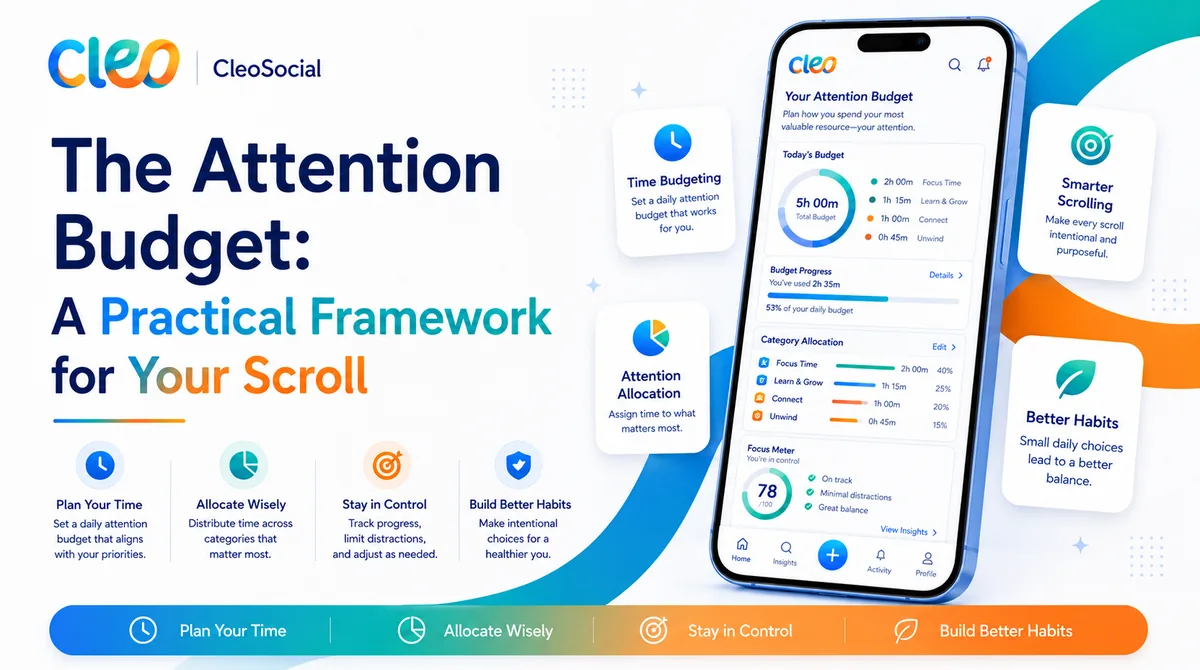
Readiness across several of these signs at once is a genuinely good moment to make a change, and the attention budget framework is a reasonable next stop — it turns the vague sense of "too much time" into a concrete accounting you can actually act on. From there, the fifteen-minute setup is a small enough ask that the plan from sign five has somewhere real to start.
If Only One or Two Land
That's fine, and worth saying plainly: partial readiness doesn't mean nothing's wrong, it just means the full switch might be premature. The ten-minute feed audit is a lower-commitment way to get real data on your current feed before deciding whether the bigger change is warranted — sometimes the audit alone is enough to clarify which of the six signs actually apply.
The Honest Point of a Checklist Like This
A list like this isn't a diagnosis and it isn't a sales pitch dressed as one. It's a way of turning "I feel bad about my screen time" into something specific enough to act on — because specific problems have specific fixes, and vague guilt mostly just produces another deleted-and-reinstalled app by Thursday.
Download CleoSocial free from the App Store, or start with the honest review if you want the limitations before the pitch.
Ready for Social Media That Respects You?
CleoSocial puts you in control. Content ratings, time limits, and real connections. Free to use, always.

Continue Reading

How to Set Up CleoSocial for the New School Year
September 3, 2026
One Month on CleoSocial: What Changes, What Doesn't, What Surprises
August 29, 2026