Two Months on CleoSocial: What Changes After the Novelty Fully Fades
The sequel to the one-month check-in: what holds at the sixty-day mark, once the school year is in full swing and the settings have been tested by a real routine.
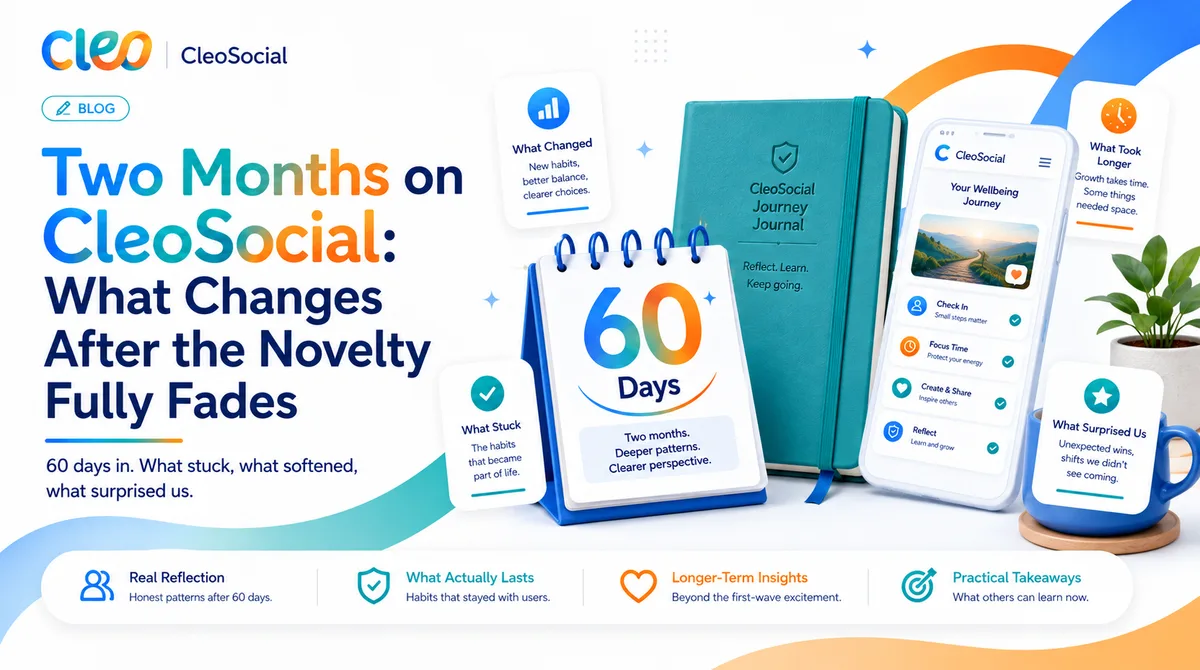
Table of Contents
Two Months on CleoSocial: What Changes After the Novelty Fully Fades
The one-month post covered the territory past novelty — settings that stop being settings, evenings that keep their edges. That check-in landed at the end of a quiet August. This one lands at the end of a very different month: a school year in full swing, schedules genuinely tested, the back-to-school reset either holding or exposed as premature. Sixty days in is where a setup gets tested by a real routine instead of a calm one, and that test reveals things the first month couldn't.
What the School-Year Test Reveals
A setup built during a quiet summer week faces a different bar once homework, activities, and an actual bedtime schedule are back in play. The users whose September went smoothly, by report, are overwhelmingly the ones who ran the back-to-school reset rather than coasting on summer settings — the earlier Quiet Hours window in particular shows up again and again as the difference between a semester that started calm and one that started catching up on sleep debt by week three.
For the ones who didn't reset: the good news is the architecture is forgiving of a late start. A Quiet Hours window moved in week four of the semester still does its job for the remaining weeks; it just does less for the weeks already behind it. Sixty days in is a fine time to run that reset if August didn't include it.
Two Months on CleoSocial: What's Fully Settled by Now
Where the one-month post described settings receding, the two-month mark tends to describe them as essentially invisible — Feed Control and the ceiling operating closer to instinct than decision at this point, adjusted maybe once since the school-year reset rather than actively managed. The compulsive-check loop described at the one-month mark as "dying" is, by sixty days, reliably dead rather than fading — users report genuinely forgetting the old checking rhythm existed, in the specific way habits stop being effortful once they're fully replaced rather than merely suppressed.
What's New at Sixty Days
The comparison to classmates gets sharper. Two months into a school year is enough time for the contrast between a governed feed and an unmanaged one to become genuinely visible in a peer group — not as a lecture, but as an observable difference in who seems less frayed by an intense week. Several college-specific setups report this as the moment the choice starts feeling validated by something other than personal preference.
The after-school Quiet Hours block earns its keep. A window most people add somewhat skeptically during setup — a second, shorter block for the homework stretch rather than just the nighttime one — tends to be the feature two-month users mention unprompted most often, because its payoff (actual homework completion, an argument not had) is concrete in a way the nighttime block's payoff (marginally better sleep) is harder to feel day to day.
Fall's shorter days start testing the setup again. The seasonal creep that shows up as daylight shortens hits right around the two-month mark for users who started in early August, which makes this checkpoint a natural moment to rerun the feed audit rather than assume September's numbers still hold in October.
The Honest Gaps, Still
Two months doesn't manufacture a network any more than one month did. The two-app split remains the working answer for most users, and it's worth saying plainly: this is not a gap that closes with more time on the app. It closes, if it closes at all, when enough of a person's actual network makes the same choice — which is a slower, social process this product doesn't control and shouldn't claim to.
A Question We Get Often at This Stage
The most common message we hear around the two-month mark is some version of: "my ceiling feels wrong now, but I'm not sure if I should change it or if that's just me second-guessing a good setup." Worth answering directly, because the instinct to leave a working setting alone out of caution is understandable but often backwards. A ceiling set two months ago reflected who you were two months ago — busier or calmer, more or less resilient, interested in different things. Feeling a settled setting start to chafe slightly isn't usually a sign it was wrong from the start; it's more often a sign that two months of actual life have passed and the setting hasn't caught up. Adjusting it isn't undoing progress. It's the same recalibration the school-year reset already asked you to do once this season — just arriving a second time, which is normal rather than concerning.
The Two-Month Review
Three questions, sequel to the one-month post's own three:
- Did the school-year reset hold, or did it need a second pass? Either answer is useful information — a reset that needed adjusting isn't a failure, it's the settings finding their actual fit under real conditions rather than a guess made in a quiet week.
- Is the after-school block doing what the nighttime block does, just for a different part of the day? If it hasn't been added yet, this is the checkpoint to add it.
- Would the version of you from two months ago recognize how little you think about this now? Most two-month users answer no, and mean it as the highest compliment the product gets — the whole bet was that good architecture disappears.
If you're just starting: the fifteen-minute setup is the same starting point it always was, and one month is the next checkpoint after that, whatever season you land it in.
Download CleoSocial free from the App Store, or run the feed audit today if it's been a while since you last checked.
Ready for Social Media That Respects You?
CleoSocial puts you in control. Content ratings, time limits, and real connections. Free to use, always.

Continue Reading

One Month on CleoSocial: What Changes, What Doesn't, What Surprises
August 29, 2026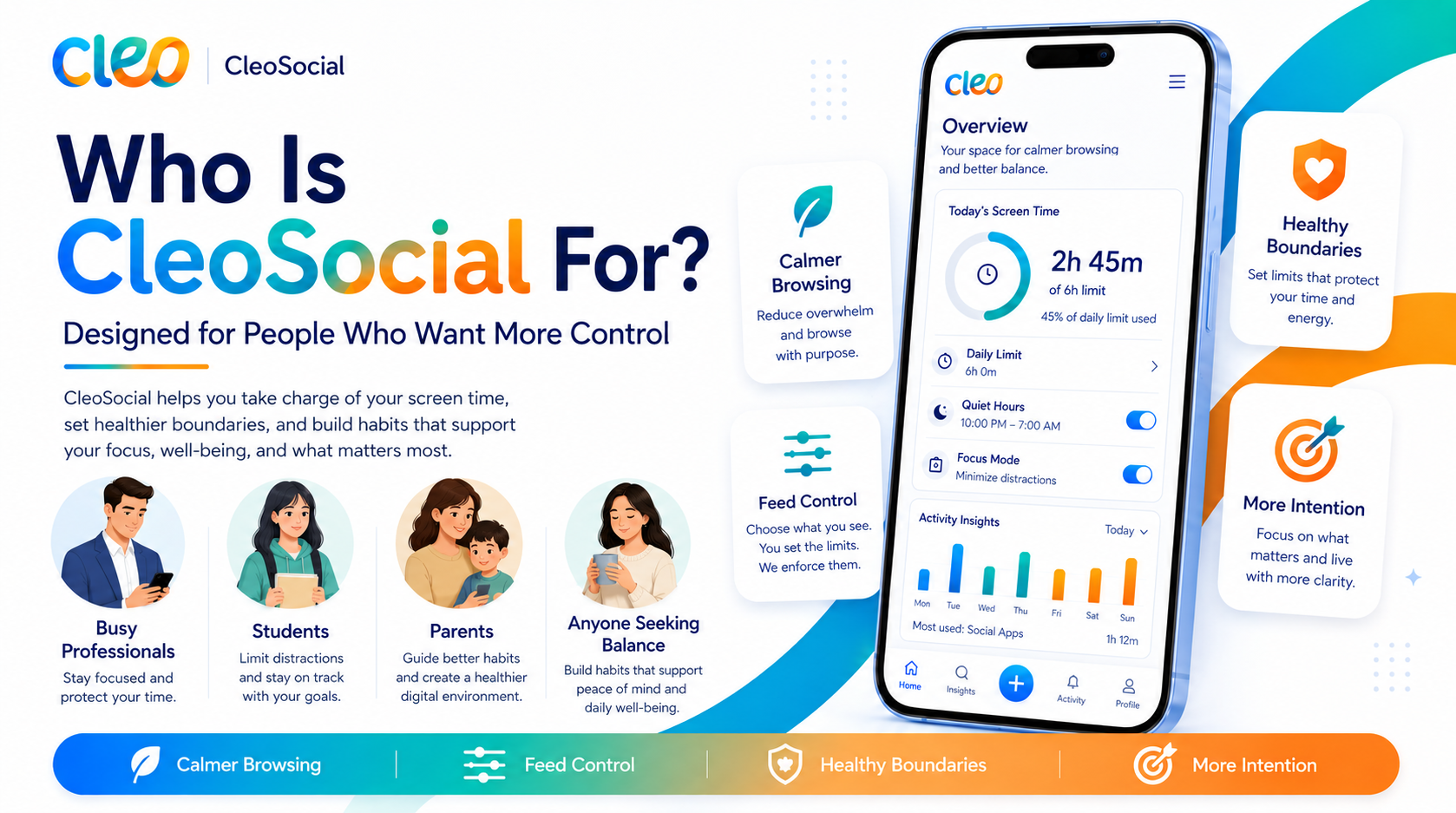
Who CleoSocial Is For (and Who Should Skip It)
July 18, 2026